
My name is MUHAMMAD ZULHAKIMI BIN MOHD NASIR . Im 18 years old . I was studying at UiTM Dungun , Terengganu . I took a diploma in hotel management course . My portfolio is about UED 102 . UED 102 teach us study skills in university .
CONTENT UED 102
1. Learning style imventory
2. Goals statement – The five step to approach
3. Fixed – Commitment Calendar
4. Job task analysis
5. Priortized to-do list
6. Memory strategies
7. Organized strategies
8. Concertration strategies
9. Concertration chart
10. Reading text
11. Note-taking strategies
12. Note-taking exercise using the cornell method
13. GPA worksheet
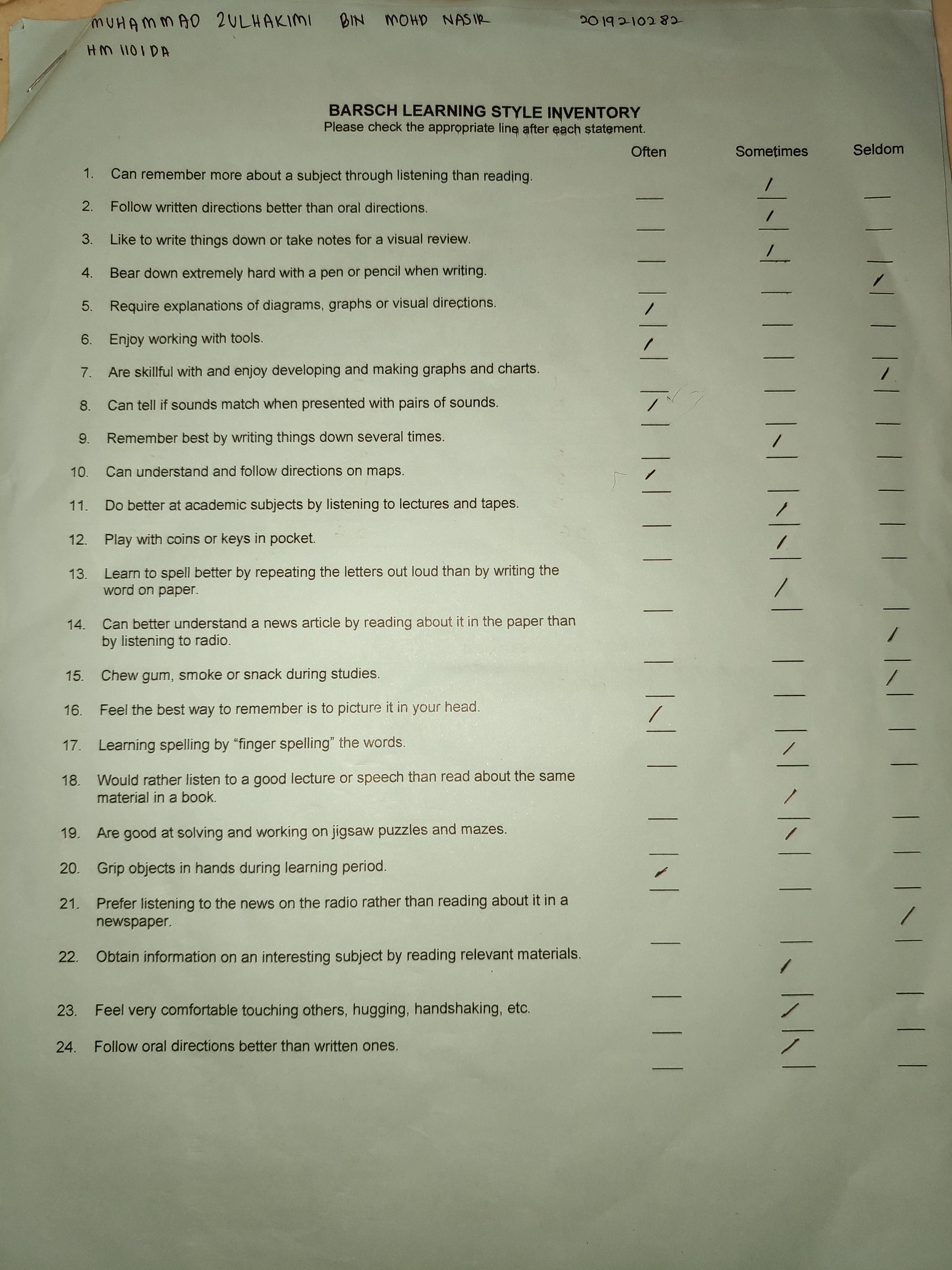
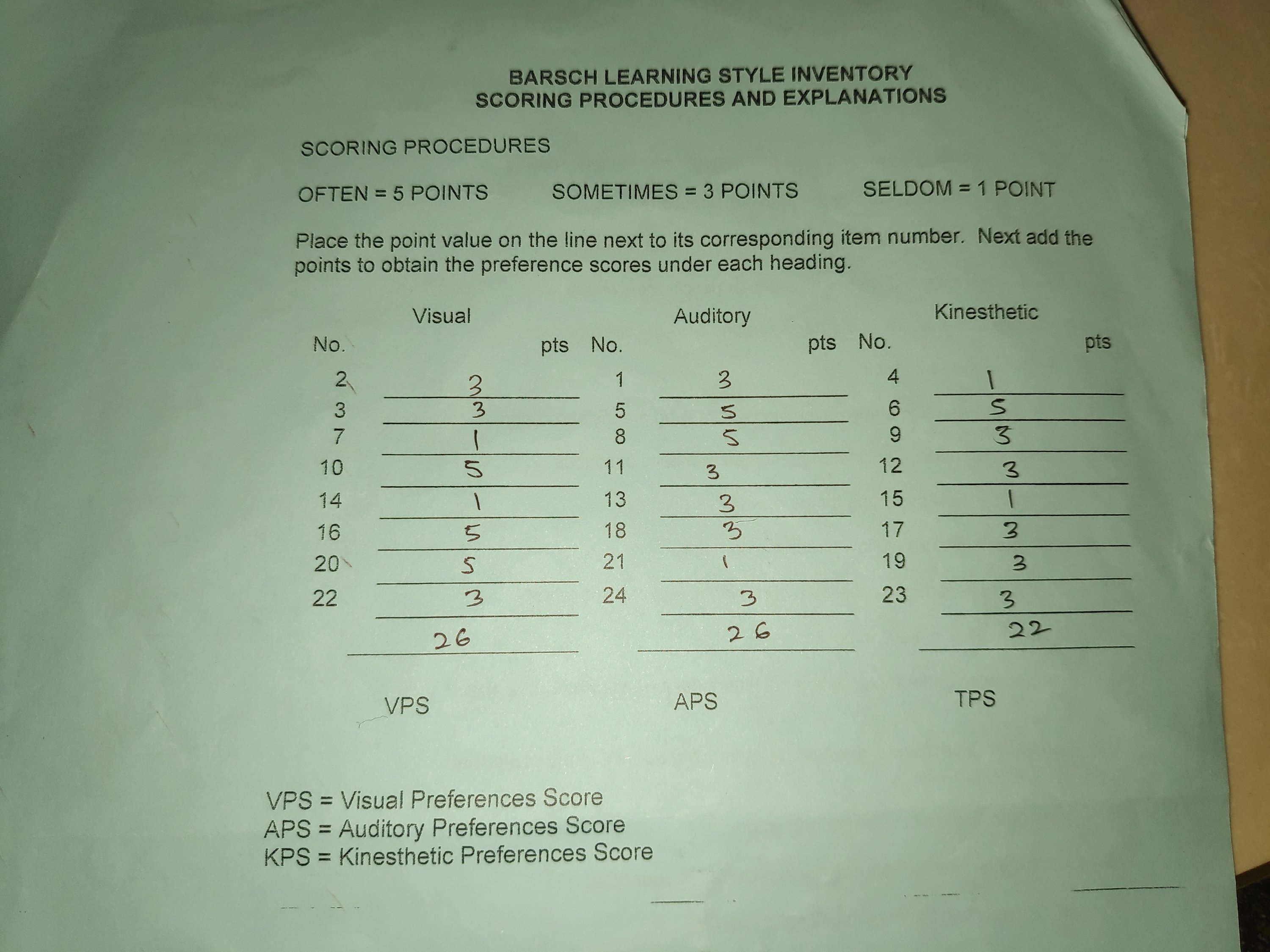
1. Learning style inventory
Learning style inventories are designed to help respondents determine which learning style they have. These inventories typically take the form of a questionnaire that focuses on how people prefer to learn. Respondents choose the answers that most closely resemble their own preferences.
How a Learning Style Inventory Is Used
Learning style inventories are based on the idea that people have different strengths and preferences when it comes to learning. Many theories exist suggesting that people can be classified based on their predominant learning ‘style.’ Most of these ideas propose that all people learn differently and that designing instruction based on these learning styles can enhance the educational process.
(source : google)
2. Goals statement – The five step to approach
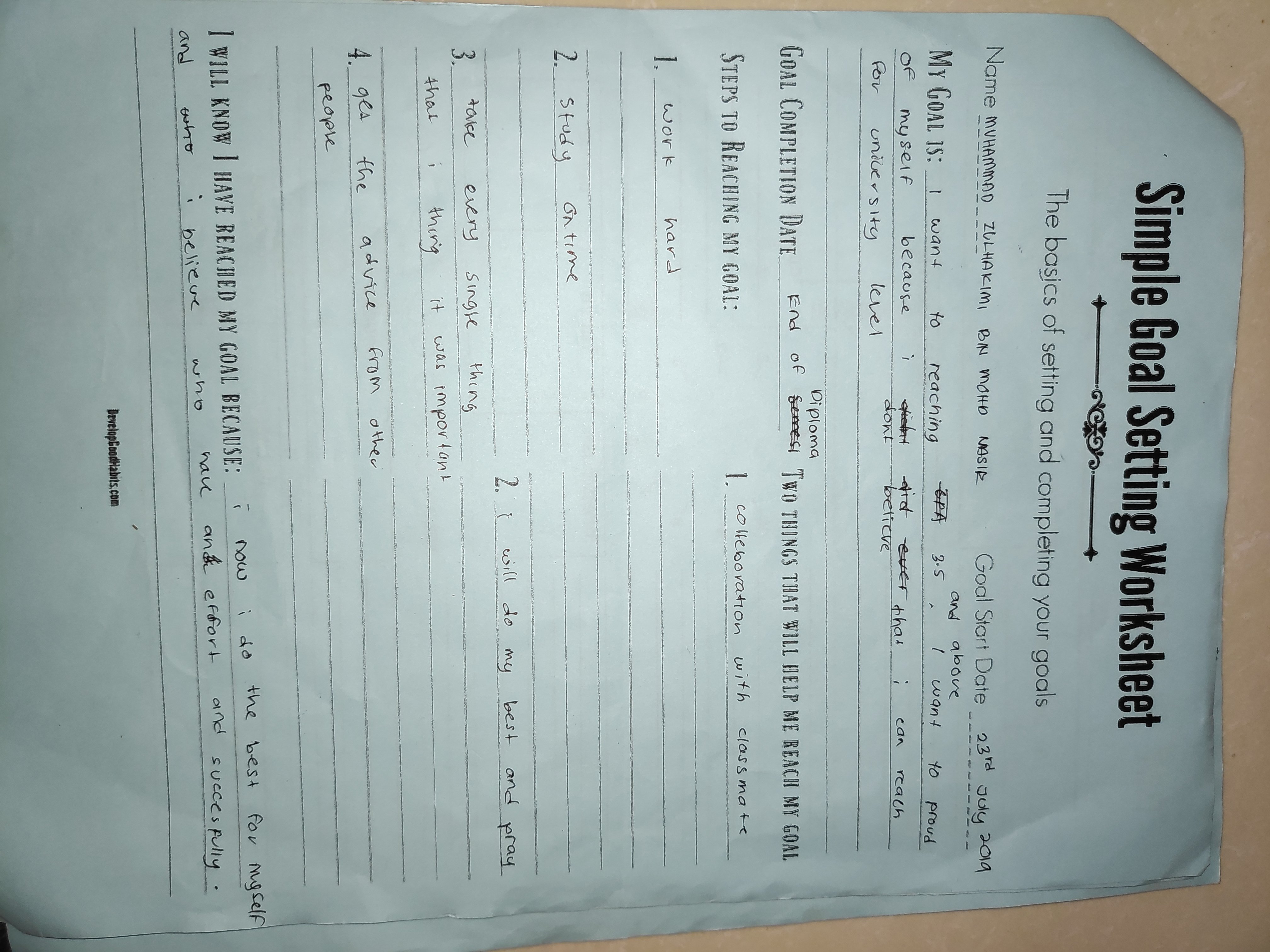
2. Write down any obstacles. Think about whether there are any course requirements, assignments, tests, or technology factors that could jeopardize your success. Make a list of the difficulties you may encounter.
3. Consider your general resources. What subjects are easier for you? Are you better with science or math? Is social studies a breeze? Who do you depend on for help when circumstances get tough? Your parents, friends, teachers, guidance counselors, and other significant adults are all resources. Next, consider each of the obstacles you listed. Think about how you might use your resources to overcome each obstacle. Write down specific resources you could use to achieve each goal.
4. Review and revise your rough goal statement. Now that you have considered all possible difficulties and your resources, you are ready to write your final goal statement. In some cases, you may find that your rough goal statement is fine the way it is.
5. Polish your goal statement. Check to be sure that your final statement is well written and takes into consideration all the possible road blocks that may occur.
(Elyana / 25 July 2018)
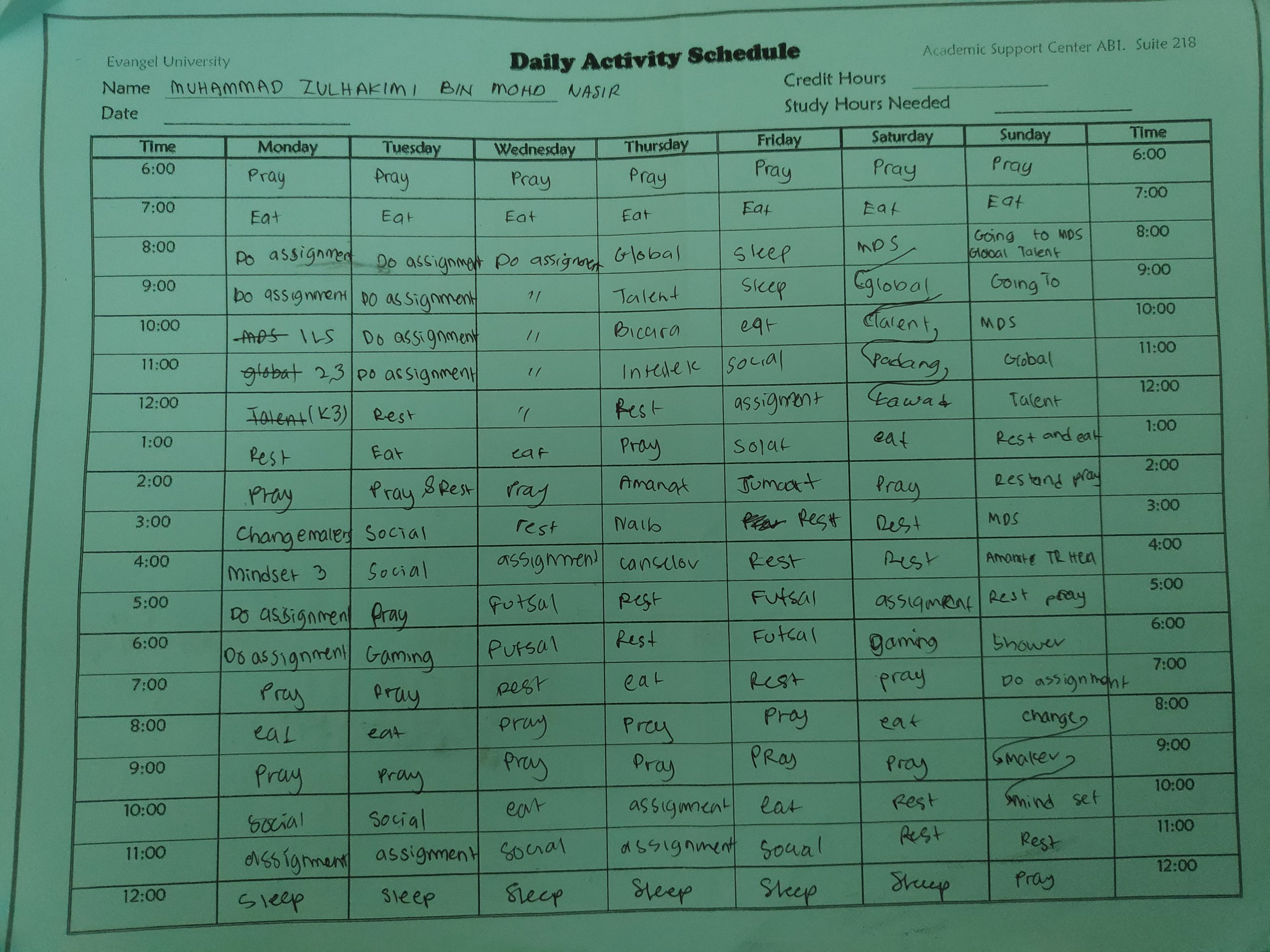
3. Fixed – Commitment Calendar
As a full time student, i need a fixed calender to make sure i manage my time wisely because time is is a stubborn illusion. By having a fixed calender i have the ability to use one’s time effectively or productively, especially at school.
4. Job task analysis
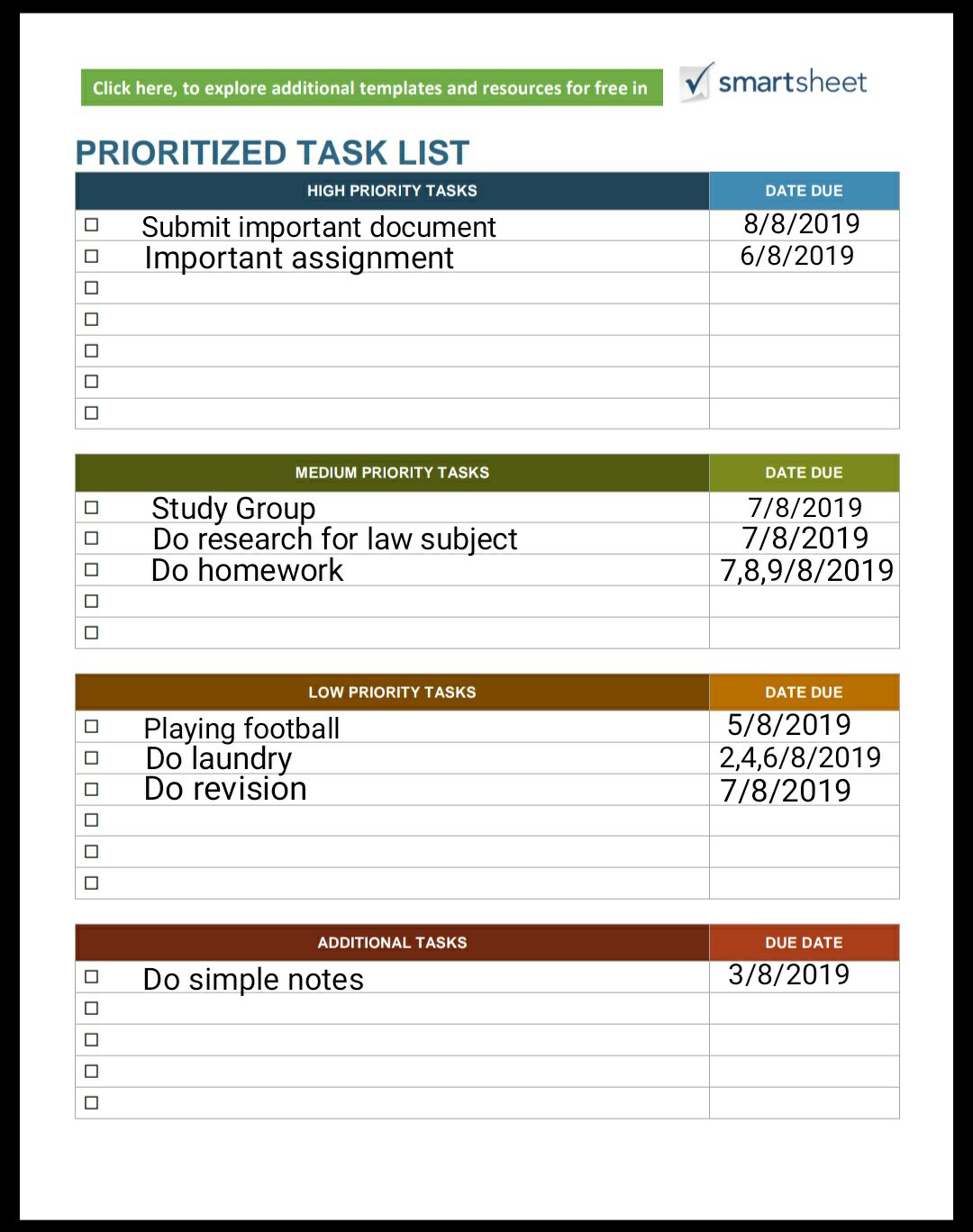
Job task analysis also is a way that you can manage your time effectively. It can help us to keep up the thing and meet deadline, reduce stress and complete work without any pressure. As a student it is important to do a job task analysis. Analysing task have two things which is the importance scale and frequency scale.
5. Prioritized to-do list
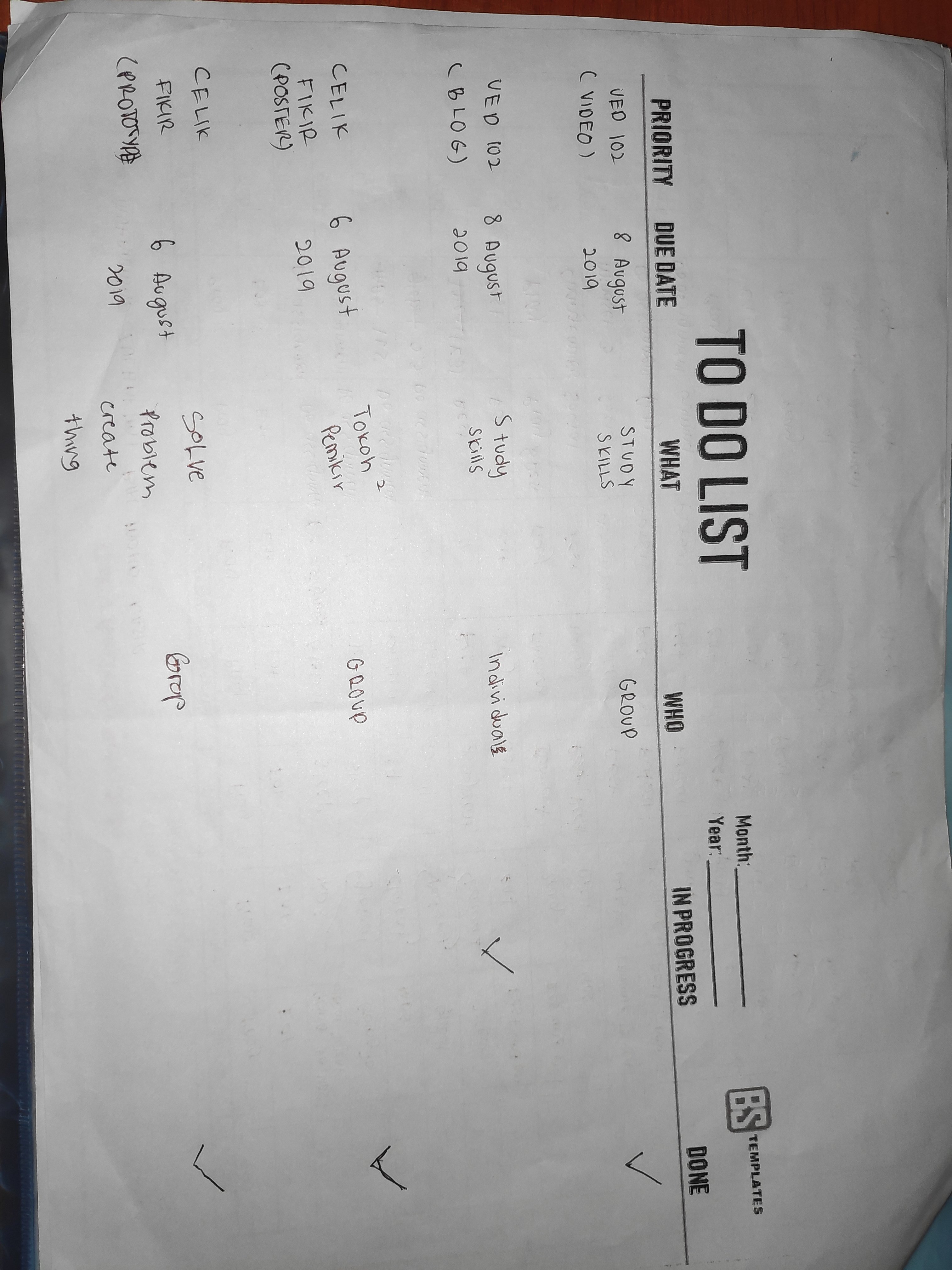
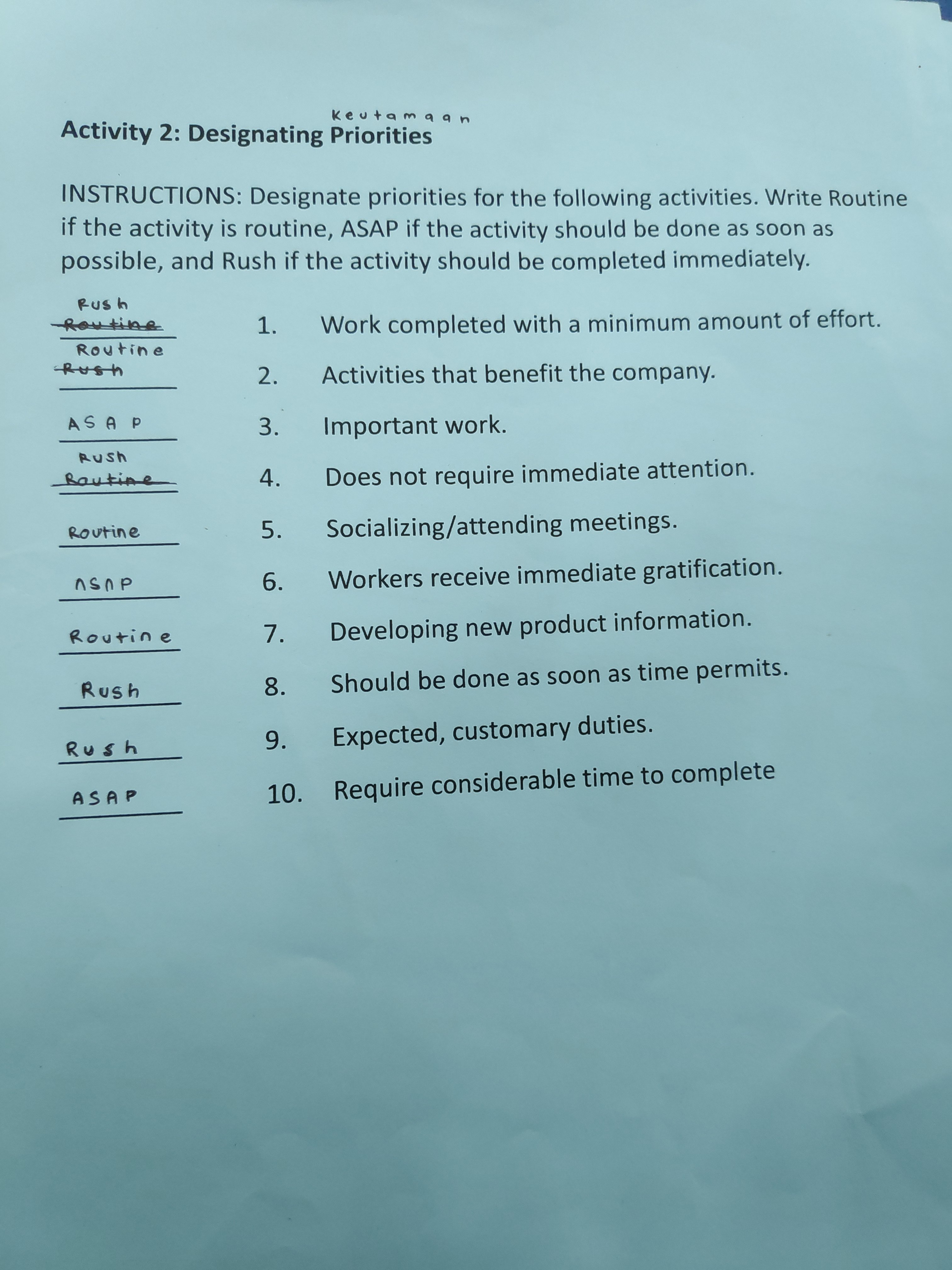
6. Memories strategies
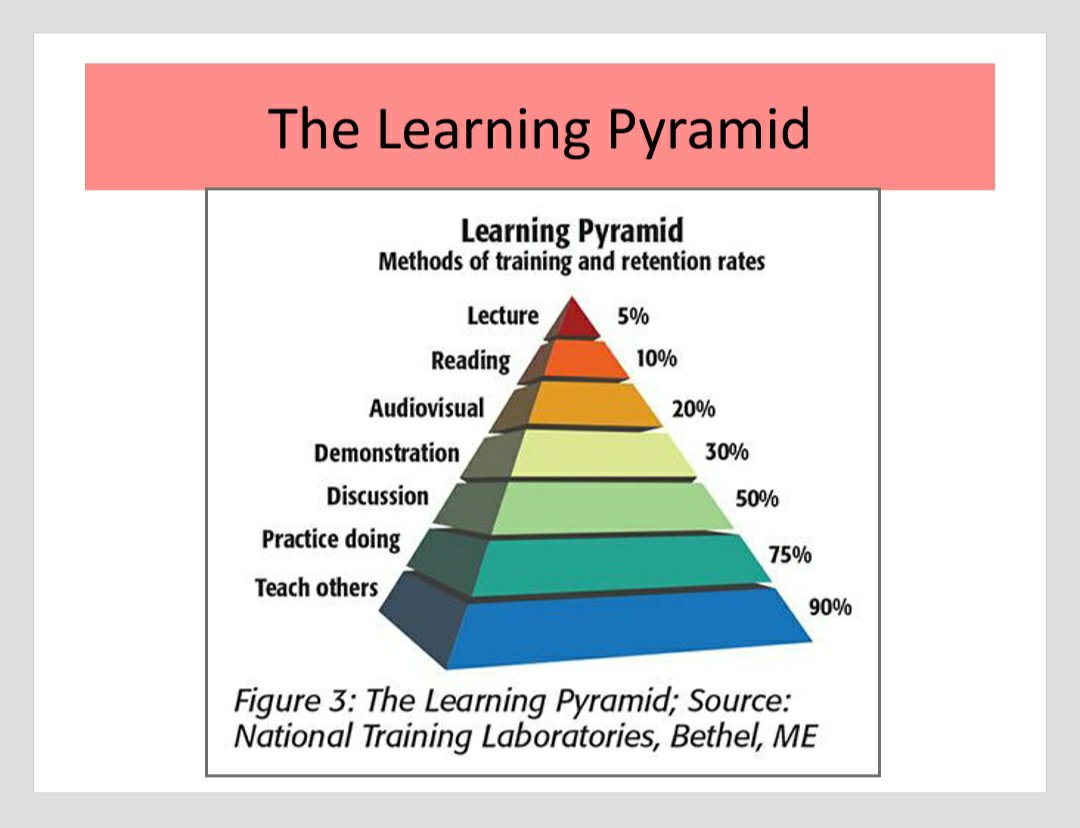
WHAT IS MEMORY?
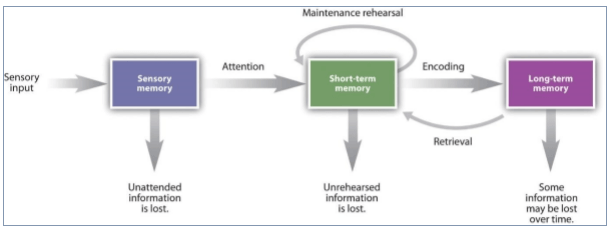
Memory is the ability to save and remain the information and experience.
There are three types of memory which are:
1) Sensory memory
Numerous incoming information from five senses will be stored in sensory memory for an instant. When you pay attention to the stimuli it will go to the short-term memory, but if you not pay attention it would not be last long and may lost.
2) Short-term memory
Our short-term memory have only limited storage. The information must be repeated in order to get information to long-term memory.
3) Long-term memory
Our long-term memory is unlimited and have large storage. If the information is not being used for long time, the information will be lost.
(Umairah / 5 August 2018)
7. Organized strategies
When im in the kuliah room my lecturer open a video to test our memory . In that video we must remember what we wacth in that video and at the end of the video . The lecturer ask us question about the things has passed in the video such as what the colour of eyes in the video , the hand is pointing at what and the clock is show at what time .
8. Concertration strategies
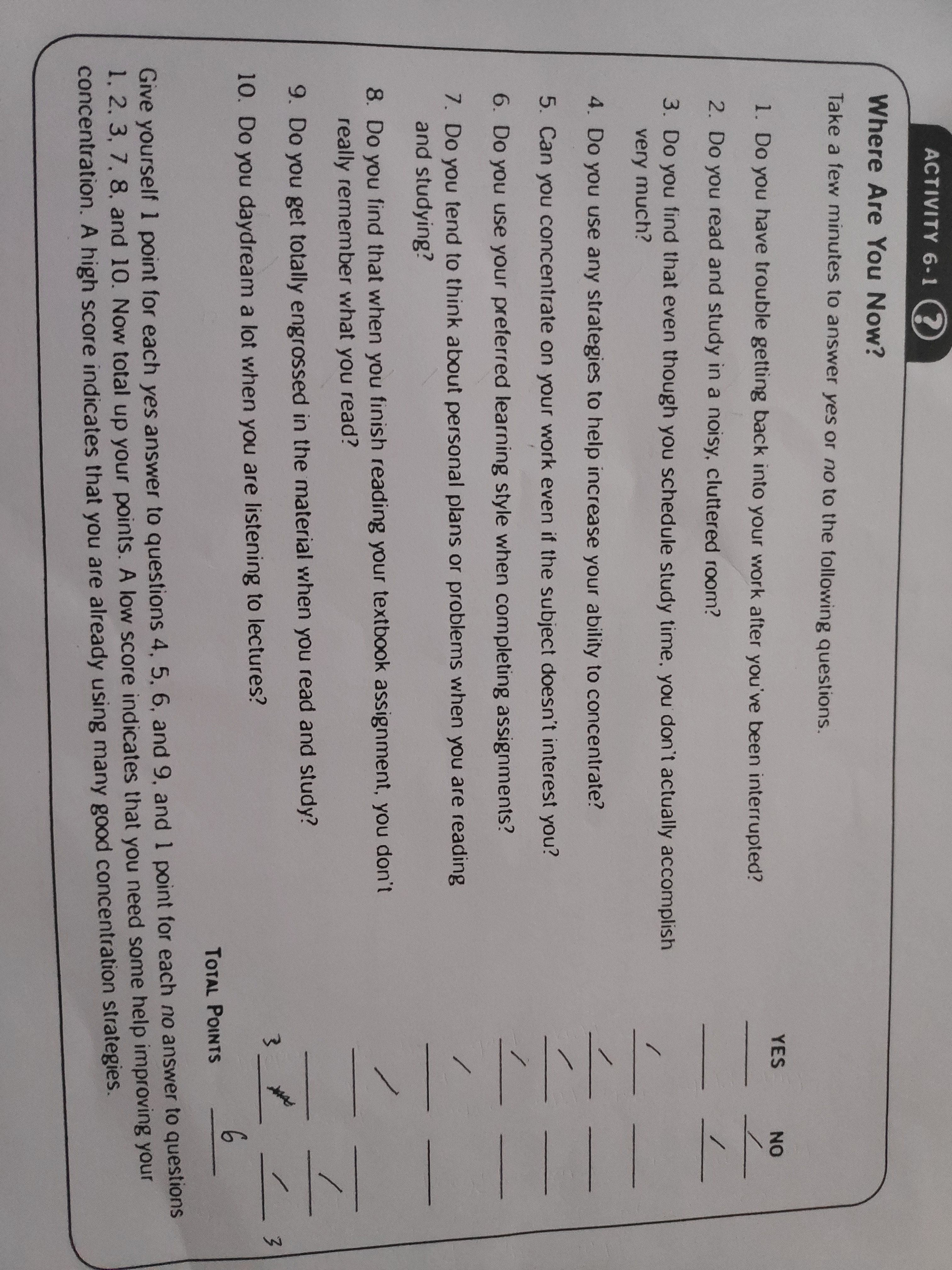
From this activity, I could identify whether I could concentrate good in my study or vice versa. After I sum up my points from this activity, I got 6 points out of 10. This shows that I am a person who is maybe easily get distracted during study and I should pay high concentration in works I do.
9. Concertration chart
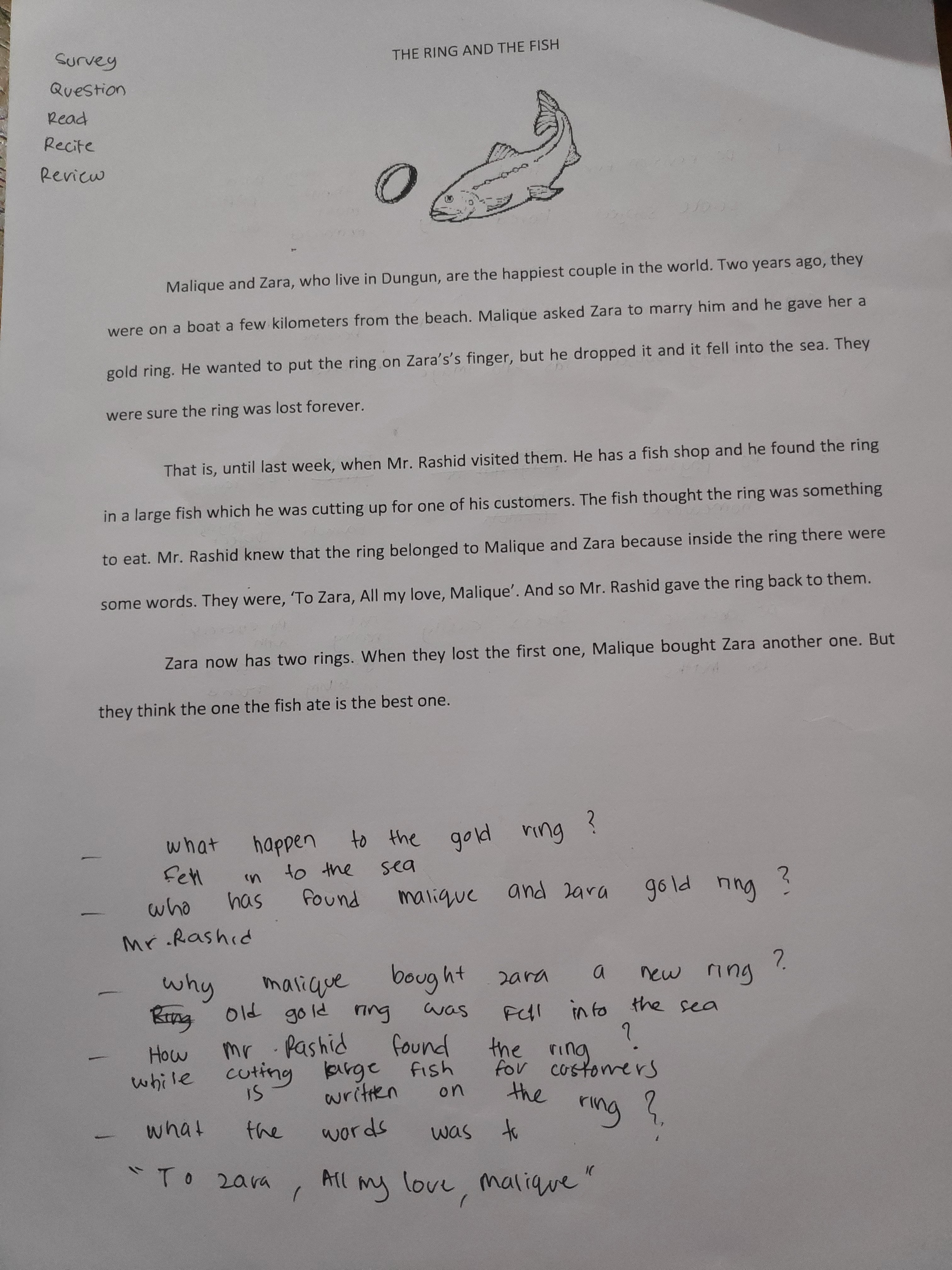
READING TEXT(STUDY SYSTEM SQ3R)
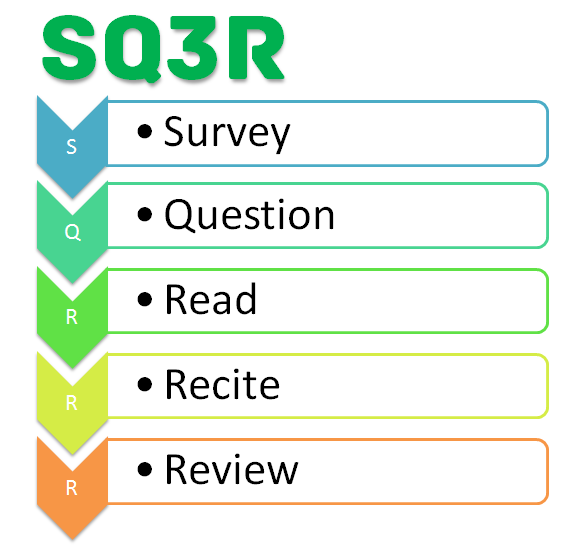
WHAT IS SQ3R?
Actually, SQ3R is stands for;
1) S- Survey
Pre-read chapter. Look at titles, headings, words in boldface and italics; graphs and diagrams; summary or conclusion and questions at the end of chapter.
2) Q- Questions
Formulate questions before you read. Convert titles and subtitles into questions. Write these down.
3) R- Read
Read chapter thoroughly and write down the answers to your questions section by section.
4) R- Recite
Try to recite the answers to your questions. Use your own words and give examples.
5) R- Review
Check your notes against the text; this is an ongoing process.
(Umairah / 5 August 2018)
10. Reading text
11. Note – Taking strategies
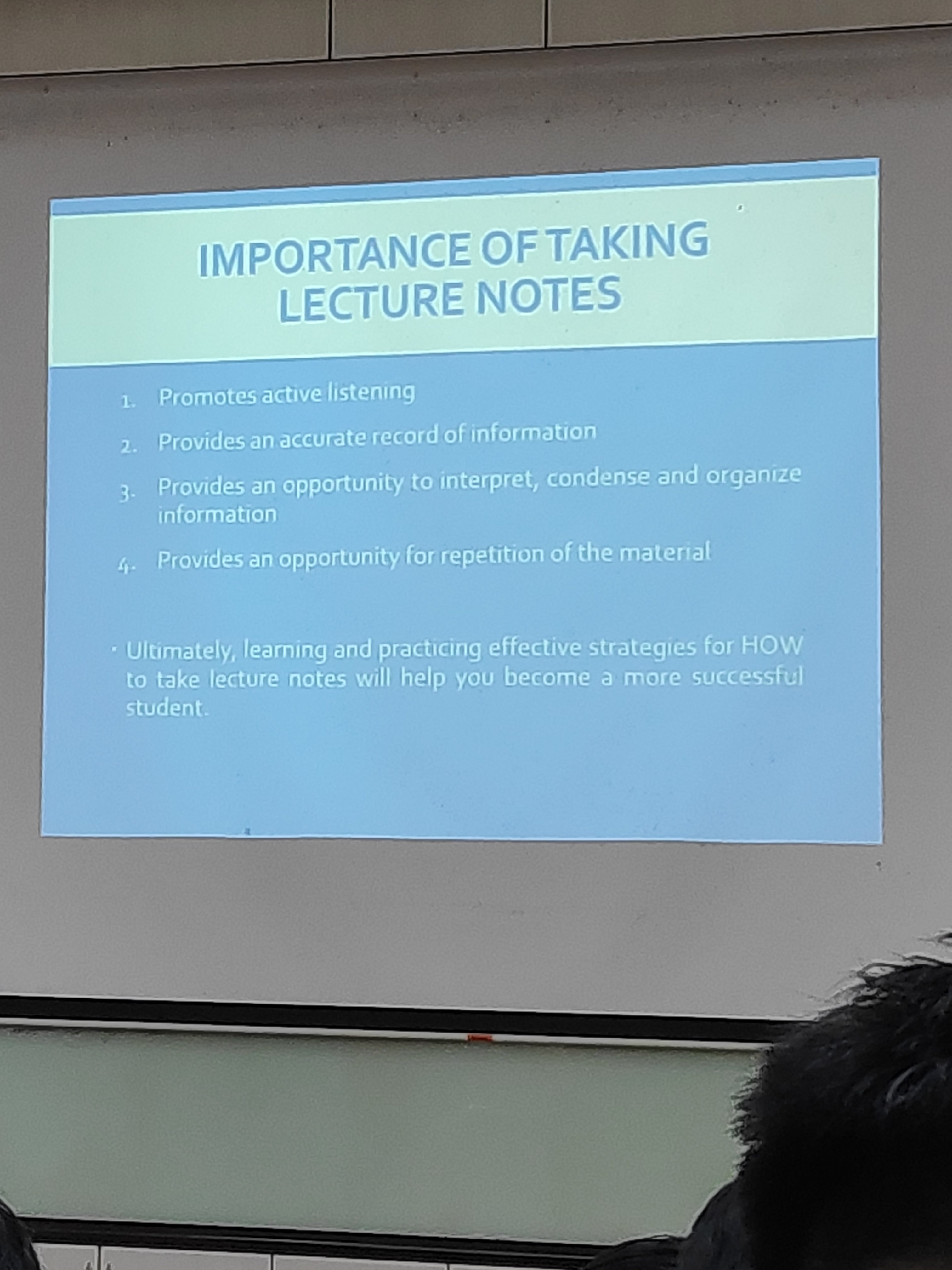
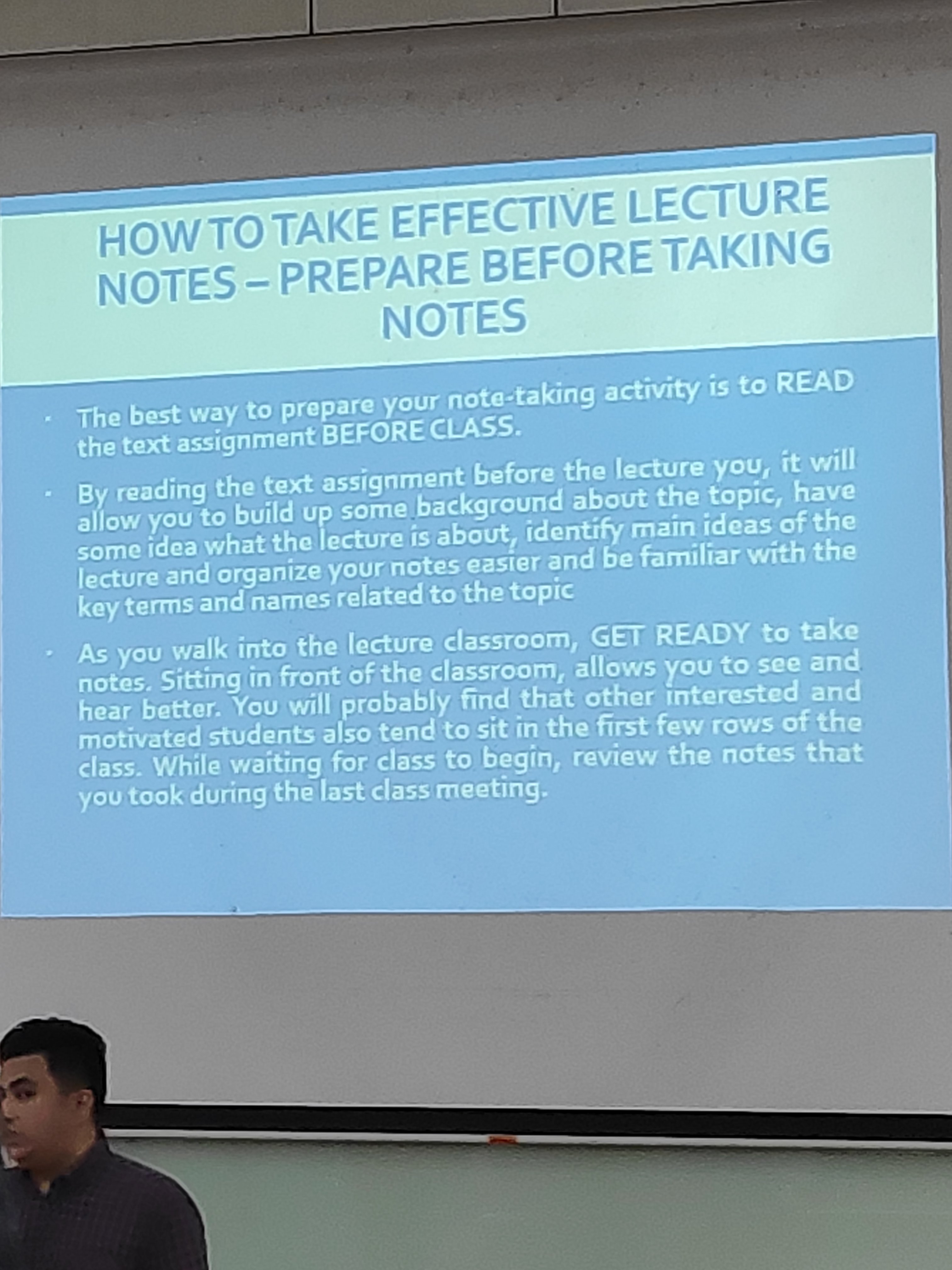
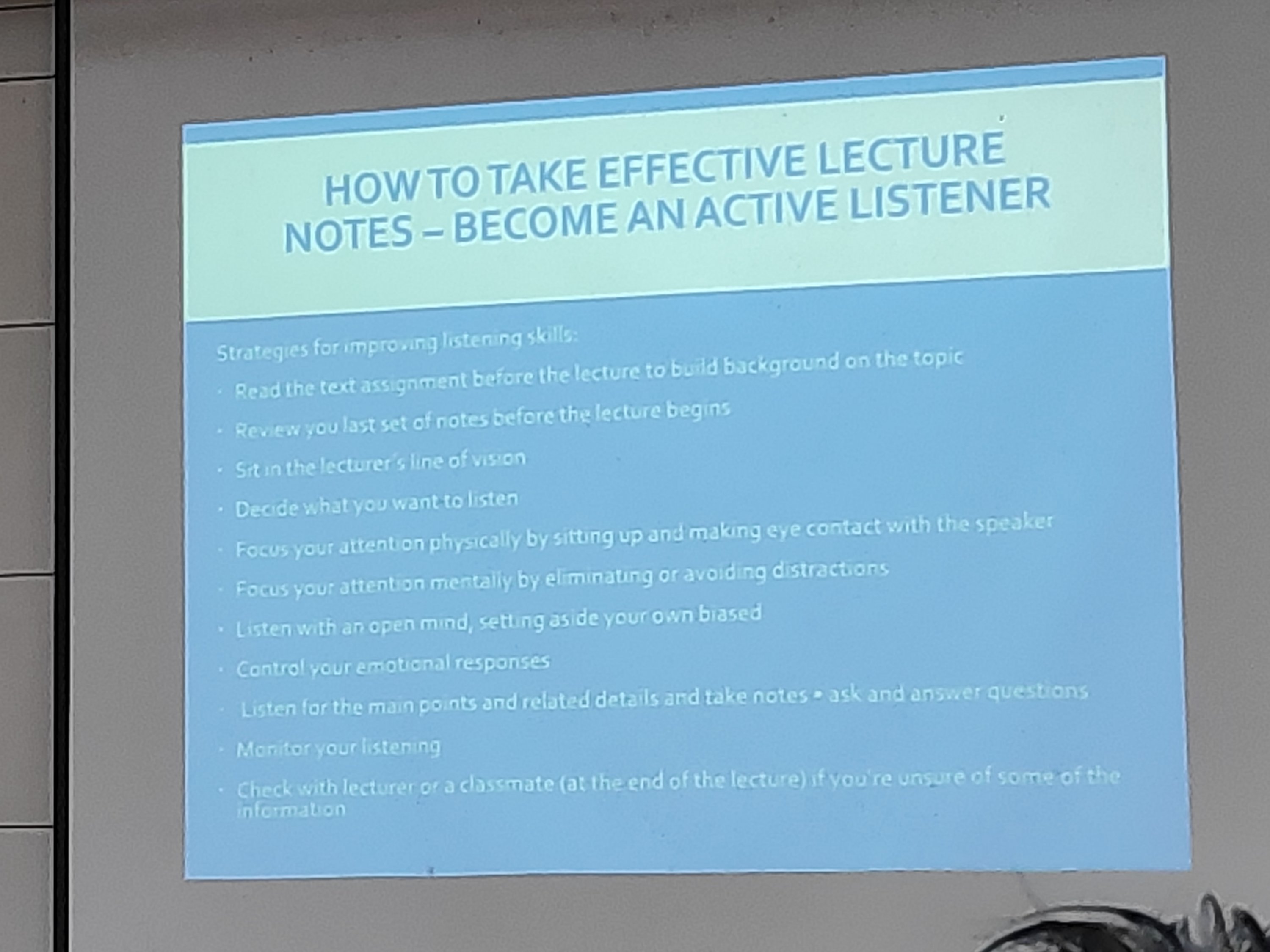
In taking note we must summarize and take the important point only . The repeat sentences maybe is the important point for taking notes
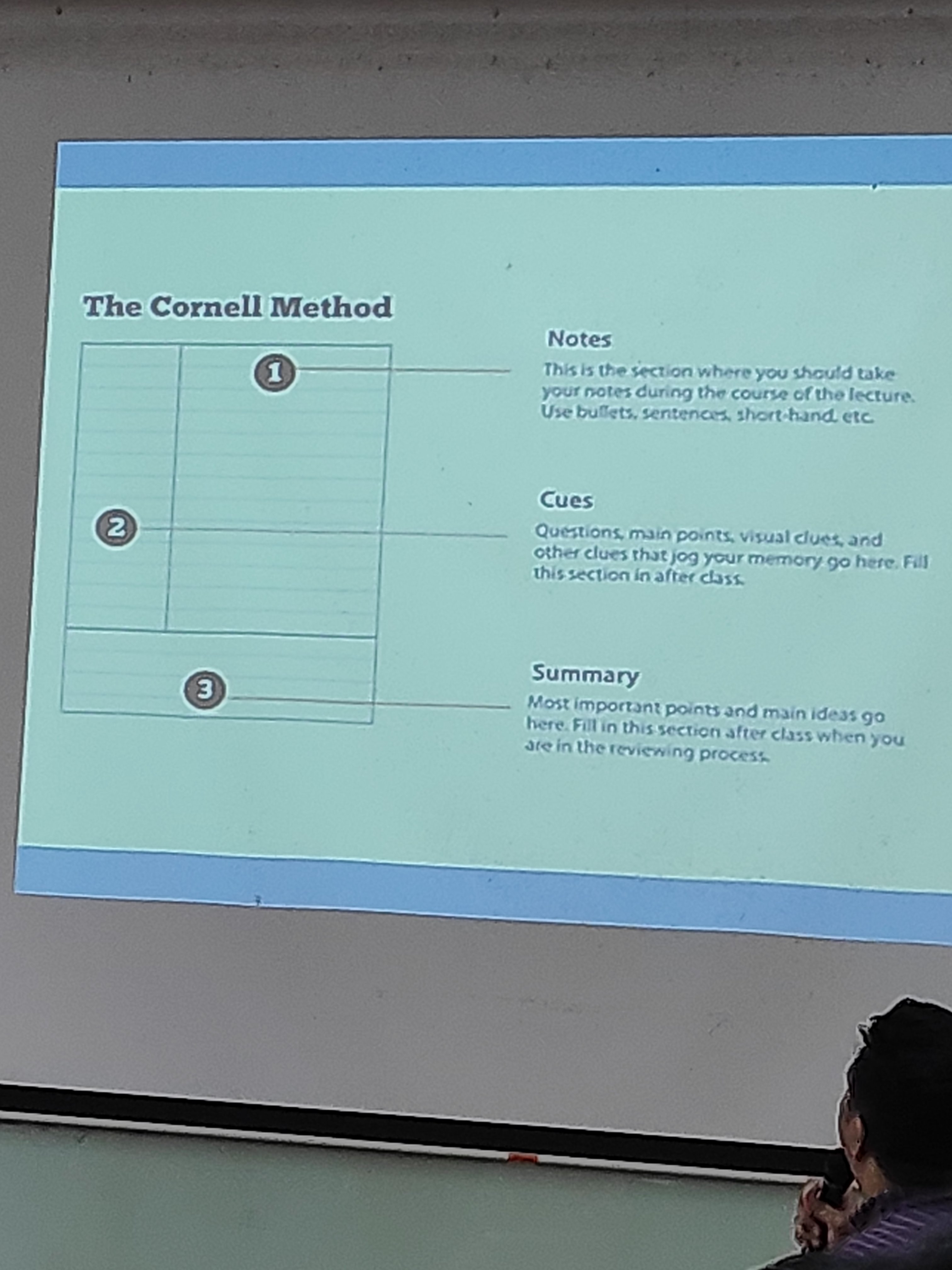
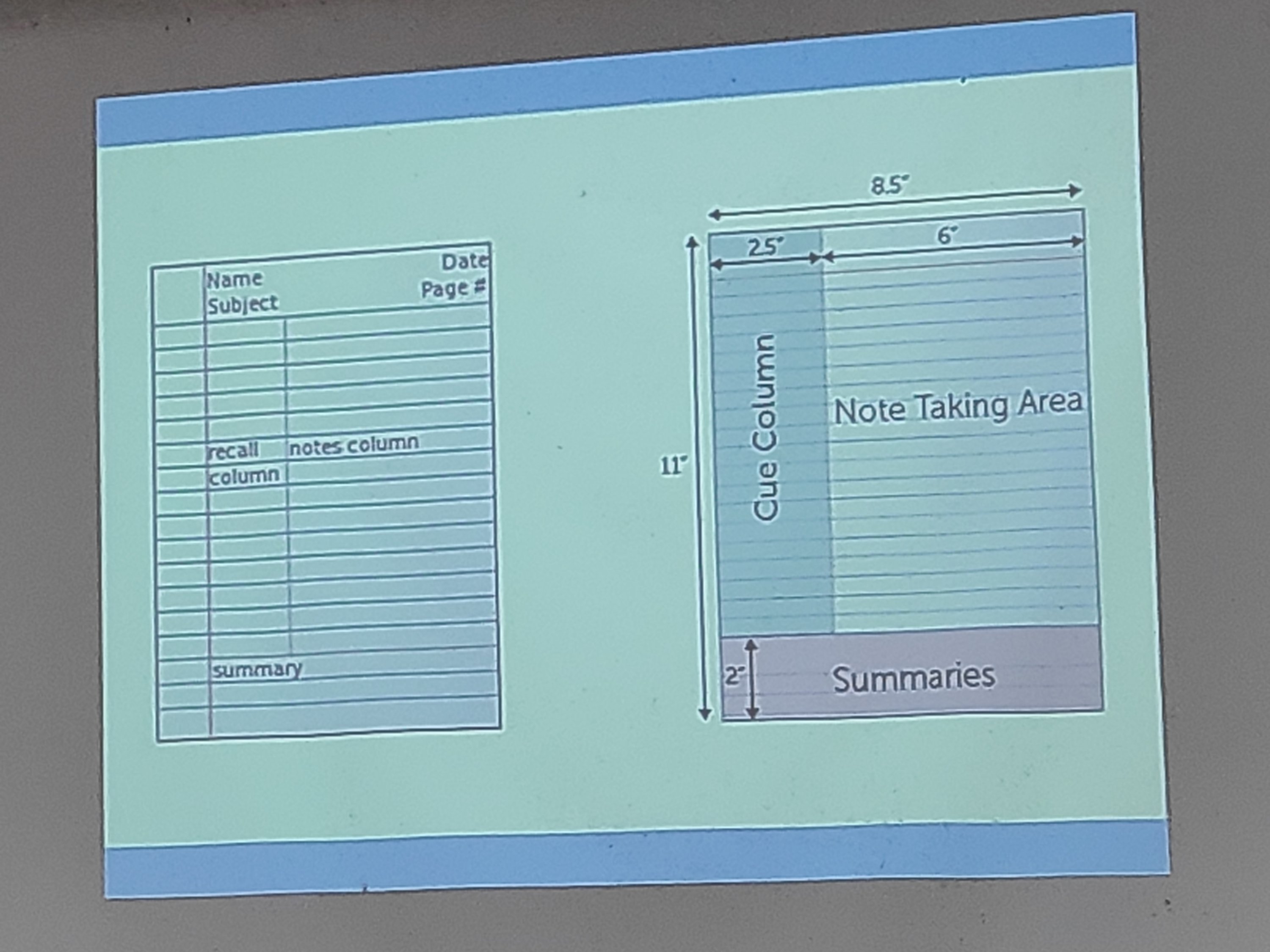
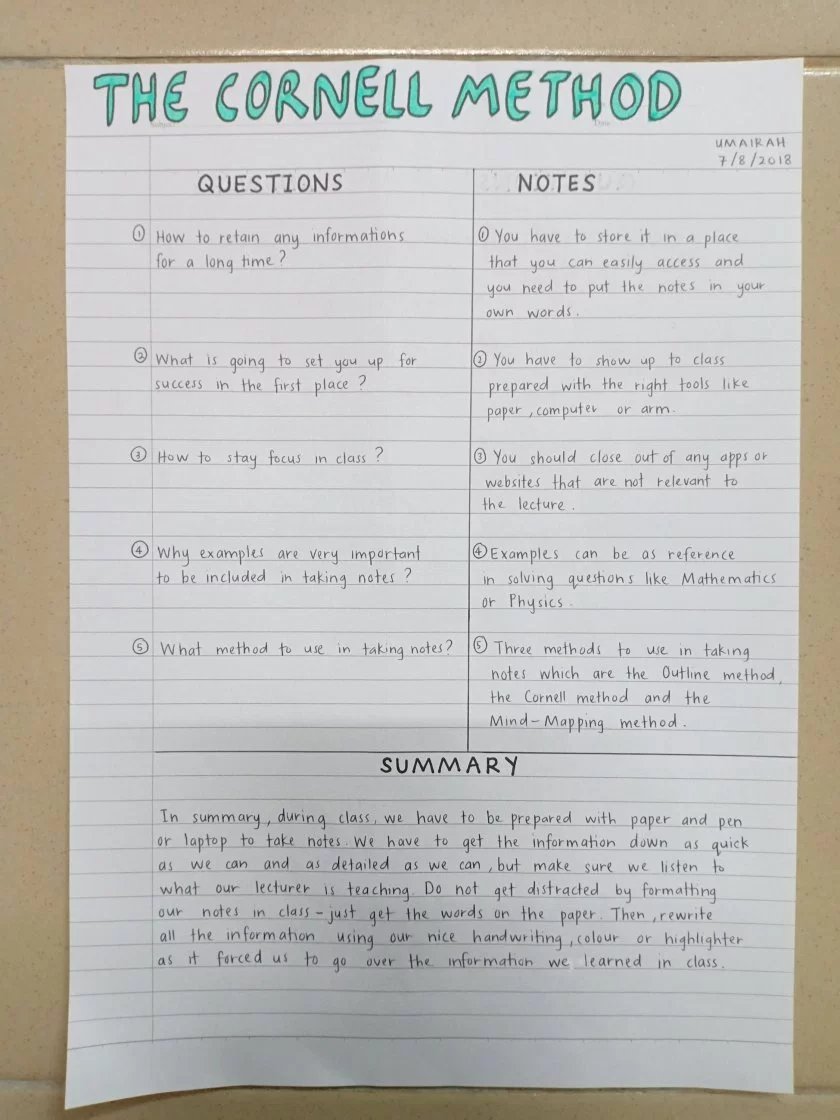
12. Note – taking exercise using cornell method
HISTORY OF CORNELL METHOD
• The Cornell method also known as Cornell note-taking system or Cornell way is a note-taking system devised in the 1940s by Walter Pauk, an education professor at Cornell University.
• Designed in response to frustration over student test scores.
• Meant to be easily used as a test study guide.
• Adopted by most major law schools as the preferred note-taking method.
(Nor / 5 August 2018)
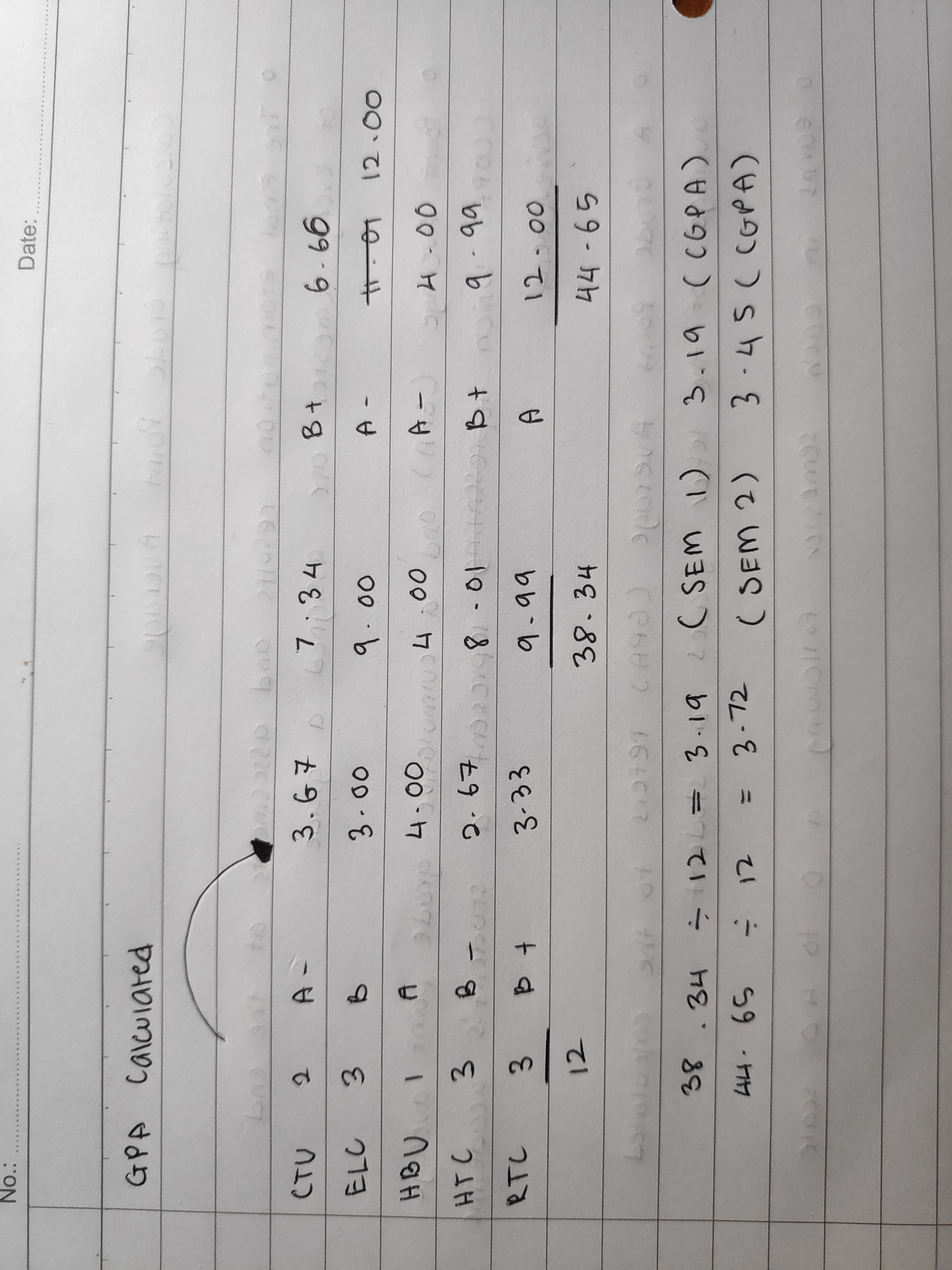
13. GPA Worksheet
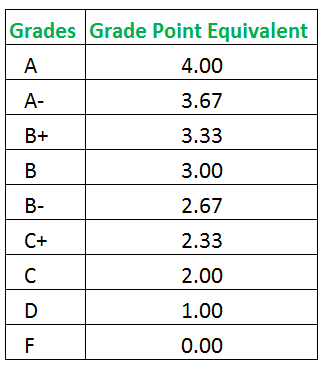
Calculating Grade Point Average
° The final examination results and assesment at the end of every semester are assigned a grade
° Point average (GPA) and a culmulative grade point average (CGPA) which represent a student’s academic achievement
° A grade point average (GPA) refers to the calculated average of the letter geades a student
° Earns in each semester following a 0 to 4.0 scale

 Zulhakimi